SAB Foundation backs 20 South African social innovators with R18.4 million in funding and business support
Locally developed innovations in healthcare, education, housing, mobility, water security and disability inclusion recognised at the 2026 Social Innovation and Disability Empowerment Awards
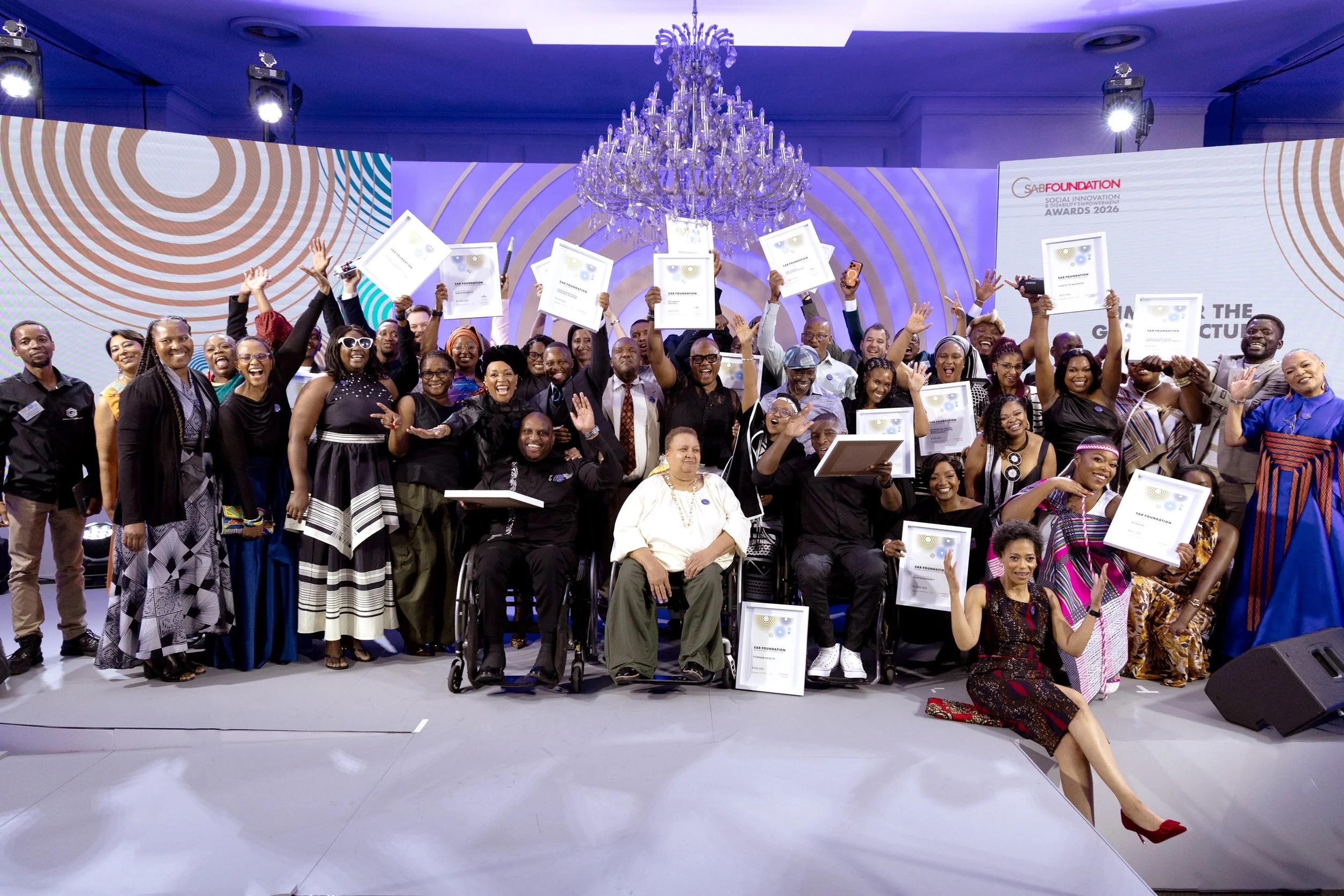
Twenty South African social innovators will receive a combined R18.4 million in grant funding and business development support following the 2026 SAB Foundation Social Innovation and Disability Empowerment Awards, held in Johannesburg on 15 October.
This year’s recipients include a locally manufactured prosthetic knee, an advanced wound-care solution using donated human placental tissue, a WhatsApp-based AI tutor, an affordable housing system made from soil and recycled plastic, and an inclusive agricultural model creating economic opportunities for persons with disabilities.
The awards recognise entrepreneurs developing practical solutions to social, economic and environmental challenges, while building businesses with the potential to grow their impact and reach more people.
“What stands out about this year’s innovators is the breadth of the problems they are responding to and the quality of the solutions being developed here in South Africa,” says Sarah Mthintso, Executive Director of the SAB Foundation.
“These are entrepreneurs looking at challenges in healthcare, education, housing, mobility, water, access to finance and economic participation and asking how they can solve them differently. The opportunity is to help those solutions become stronger businesses capable of reaching more people.”
Social Innovation Awards
First prize in the 2026 Social Innovation Awards was awarded to NuvionDerm™, developed by MagiTech Science. The advanced wound-care solution uses donated human placental tissue to support the body’s natural healing process and is designed for chronic wounds, burns, ulcers and surgical wounds.
LolaHouses from Earth and Plastic Waste received second prize. Developed by Lola Green, the innovation converts locally sourced soil and recycled plastic waste into affordable, durable homes, reducing reliance on conventional construction materials while diverting plastic waste from landfill.
Third prize went to BuddyAI, a WhatsApp-based AI tutoring platform providing personalised, curriculum-aligned support to Grade 1 to 12 learners through multilingual tutoring, exam preparation, adaptive quizzes and instant feedback.
“NuvionDerm is working to expand access to advanced wound care, LolaHouses is applying local materials and recycled waste to affordable housing, and BuddyAI is making additional learning support accessible through technology that many South Africans already use every day,” says Mthintso.
“They are very different innovations, but each responds to a real need in a practical way. That is where social innovation becomes powerful.”
Disability Empowerment Awards
The 2026 Disability Empowerment Awards were supported by the Disability Empowerment Concerns Trust (DEC Trust), which joined the SAB Foundation in funding innovations that expand access, independence and economic participation for persons with disabilities.
First prize was awarded to NAVU Mobility for its NK Gen-1, an affordable, locally manufactured prosthetic knee for above-knee amputees. Its modular design allows individual components to be replaced rather than the entire device, reducing costs while supporting mobility, stability and independence.
Wheels of Change Inclusive Enterprise Hub received second prize for its “Train-Produce-Trade-Sustain” model, which creates economic opportunities for persons with disabilities through practical skills development and enterprise activity across textile production, catering, farming and wheelchair repairs.
Third prize went to nXtABLED, an entrepreneurship platform created for persons with disabilities that combines accessible skills development, mentorship and business support with an online marketplace connecting disability-owned businesses to customers, funders and partners.
“The Disability Empowerment Award winners show the range of opportunities that exist to build businesses around greater access and participation,” says Mthintso.
“These entrepreneurs are developing commercially viable solutions while responding to barriers that continue to exclude persons with disabilities from full participation in society and the economy.”
Nyameka Mqikela, CEO of DEC Trust, says supporting entrepreneurs with disabilities and businesses developing disability-focused solutions can contribute directly to greater economic participation.
“Disability should not determine whether someone can build a business or participate fully in the economy,” says Mqikela.
“The range of innovations recognised this year shows that disability innovation in South Africa is a growing area of entrepreneurship and enterprise. These businesses are creating solutions that can improve access while also creating economic opportunity.”
Alongside grant funding, the 20 recipients will receive tailored business development support and mentorship over 12 months to strengthen their businesses, refine their commercial models and extend the reach of their innovations.
The combined value of the funding and business development support awarded through the 2026 programme is R18.4 million.
To date, the SAB Foundation has invested R970 million in supporting 8 133 businesses across South Africa, contributing to the creation of more than 20 000 new jobs and impacting more than 113 000 livelihoods.