
‘I carry them’ - investing in people is the legacy of entrepreneurship
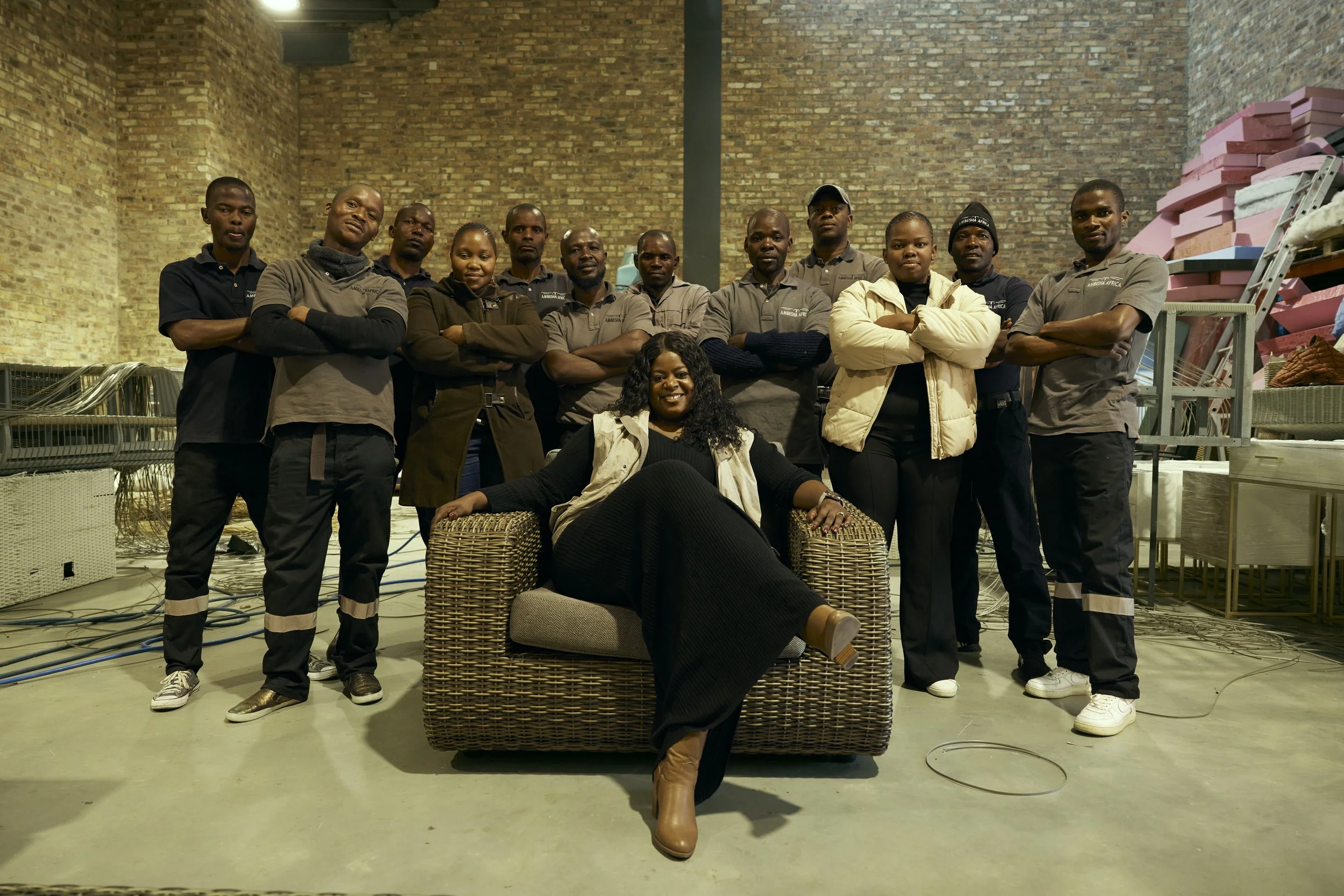
Ambesha Africa founder reflects on the cyclical nature of skills transfer in small businesses
Small and medium enterprises (SMEs) are the cogwheels of South Africa’s economy – driving what the Banking Association of South Africa says is 34% of our GDP and providing jobs to 60% of the labour force. In addition to this, entrepreneurs elicit meaningful change in the lives of people they hire and communities they serve.
The magic of support and mentorship truly drives the cyclical nature of entrepreneurship, as skills are transferred between generations, families, employers, and employees. This is according to Trudy Mkansi, the founder of Ambesha Africa, SAB Foundation programme alumni, and proudly South African local furniture design company.
“Growing up as a child, I used to imitate my grandmother weaving seagrass mats. She raised so many of us, and when I look back, I wonder how she did it. She had no formal work to fund her weaving machines. So, she used old batteries as weights, and all the plastics were taken from landfills, reusing and repurposing things,” she says.
“Apart from the passion for craft and the skill of weaving, she instilled in me the sense of hard work, resilience, and the focus on locally sourced materials that inspired me to start Ambesha Africa,” she continues.
Ambesha means to dress or to decorate in Xitsonga and expresses the business’s passion for seeing their beautiful furniture perfectly fitted into clients' homes.
“Our business is not a fast-finisher business. We make things that last,” says Mkansi. The company manufactures its own wicker material, also known as synthetic cane, from locally sourced materials all onsite at its Johannesburg premises. Mkansi explains that synthetic cane is highly customisable, low on maintenance, affordable, and mould resistant – making it perfect for durable outdoor furniture that must survive the harsh South African elements.
Our stories, our purpose
As an SAB Foundation’s Tholoana Enterprise Programme alumnus, Mkansi received a business-building recipe of funding, training, mentorship, and ongoing support. The 18-month programme provides critical training and mentorship for entrepreneurs, enabling them to assess their systems and procedures to operate a sustainable and profitable business.
Itumeleng Dhlamini, Head of Programmes at the SAB Foundation, says that purpose-driven entrepreneurs like Trudy, with the potential to scale and create employment opportunities, are exactly who the programme seeks to invest in. “We fell in love with Trudy’s story, her purpose for making a difference. We are very intentional about the type of entrepreneurs that we accept in our programmes.
“If you have the right person running that business, someone who's resilient, someone who's creative, someone who is driven, it's really about using a blend of financial support and skills development support to make sure that they are able to get into the market,” says Dhlamini.
It is this tangible, ongoing support that Mkansi believes is critical for entrepreneurs to be successful.
“I had never managed anyone in my life. I had never owned any business in my life. I didn’t even know what a balance sheet was. But the SAB Foundation believed in my story and supported me,” says Mkansi. “Even after the programme ended, their support and mentorship has been ongoing.”
Now, she manages and supports a team of 16 people. “And the 16 staff members on my team are collectively responsible for more than 72 family members who benefit from the existence of our business. This contribution, from the success of Ambesha - makes me proud and it is such a privilege to be able to provide for people,” says Mkansi.
For Lungelo Shangase, the office administrator at Ambesha, working with Mkansi fuels her own drive as a woman in business. “Trudy empowers me and inspires me as a woman in business. I’ve learned a lot from her, that hopefully I can use to start my own business in future.”
Believing in people and their stories fuels innovation and drives entrepreneurship
For Mkansi, the success of Ambesha revolves around her grandmother and the skills that were passed on to her. “That childhood memory and love for weaving - everything that I do now links back to how I grew up.
“And I believe in other people's stories - the upcoming generation, the upcoming businesspeople, especially women, I carry them,” concludes Mkansi.
Watch the story of Trudy Mkansi’s journey here and listen to her on Business Talk.